



Vacuum Cleaners by Recovery Capacity: 51-55L
Search through our Vacuum Cleaners section and you are sure to find the right product for your needs at the right price
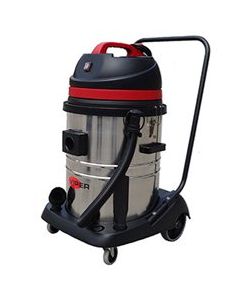
In commercial cleaning operations, vacuum cleaners are one of the most essential tools. At Janitorial Direct, we offer a full range of industrial and commercial vacuum cleaners designed to handle heavy use, challenging debris, and varied surfaces. Whether you're cleaning offices, schools, hospitals, retail, warehouses or other facilities, our machines deliver the performance, durability and flexibility your staff need.
Our vacuum range includes upright vacuums, canister units, backpack vacuums, wet/dry / industrial vacuums, HEPA / allergen control models, and accessories such as hoses, filters, brush kits and spares.
Why Choose Our Vacuum Range
- Purpose-built robustness — Unlike domestic vacuums, our units are engineered for continuous, high-frequency use, with stronger motors, durable components and serviceability.
- Comprehensive selection — From compact units for tight spaces to high-capacity industrial vacuums for heavy duty job sites, we cover the spectrum.
- Filtration & air quality focus — Options with HEPA or high efficiency filtration help maintain indoor air standards, crucial in healthcare, hospitality, schools, etc.
- Parts, spares & consumables support — We stock replacement filters, hoses, belts, bags, brush heads and other consumables to help you keep machines in operation.
- Expert guidance & support — Our team can help you size appropriately, pick the right model, and plan maintenance schedules.
- Rental / leasing / servicing — For flexibility, we can offer leasing or short-term hire, plus ongoing servicing contracts.
Key Performance Specs & What They Mean
When comparing commercial vacuums, the spec sheet often contains many metrics. Here are some you should understand:
- Airflow / CFM (Cubic Feet per Minute): Measures how much air the vacuum moves. Higher airflow is vital for moving dust, heavier debris, or moisture.
- Water lift / suction (sometimes in mmH₂O or inches of water): Reflects how strongly the vacuum can “lift” debris, including overcoming resistance in hoses or filters.
- Motor power / wattage / amps: Indicates the electrical input but doesn’t always reflect real suction efficiency—design and airflow path matter.
- Filtration efficiency / HEPA / multi‐stage filters: The ability to trap fine particulates, allergens and prevent re-emission of dust.
- Noise levels (dB): Important for environments sensitive to sound (offices, hospitals).
- Capacity / tank size / bag size: Larger tanks reduce frequency of emptying but increase weight.
- Weight, ergonomics & handling: Heft, balance, hose reach, controls, cuff design—especially for prolonged use.
- Durability & component materials: Metal parts, robust bearings, impact protection, etc.
How to Choose the Right Vacuum for Your Facility
Here are the steps and considerations to guide a good selection:
1. Map your facility & workflow
- Identify floor types (carpet, vinyl, tiles, concrete)
- Spot problem areas (corners, stairwells, high furniture density)
- Estimate the area to be cleaned daily or weekly
2. Volume, frequency & staff usage
- Higher usage demands more durable machines
- Multiple shifts or long runs require comfort, ease of servicing
3. Type of debris / special requirements
- Fine dust, allergens, liquid spills, building/dust debris will push you to specific models (e.g. wet/dry, HEPA, industrial)
4. Filtration / air quality needs
- In sensitive environments (healthcare, schools), choose sealed systems and HEPA filtration
5. Mobility & reach
- Long hose lengths, swivel joints, proper cord length, weight handling
6. Serviceability & spare parts availability
- Models where filters, hoses, belts are easy to replace, and durability is proven
7. Total cost of ownership
- Consider energy efficiency, maintenance cost, consumables (bags, filters), downtime risk
Typical Applications
- Offices, hotel rooms, corridors, lobbies
- Educational facilities, classrooms, libraries
- Healthcare areas, waiting rooms, clinics (with strict air quality demands)
- Warehouses, workshops, factory floors
- After carpet cleaning (use of extraction / wet vacs)
- Food & beverage production zones (dry dust, spillage)
- Special environments requiring strict dust control (electronics, labs)


